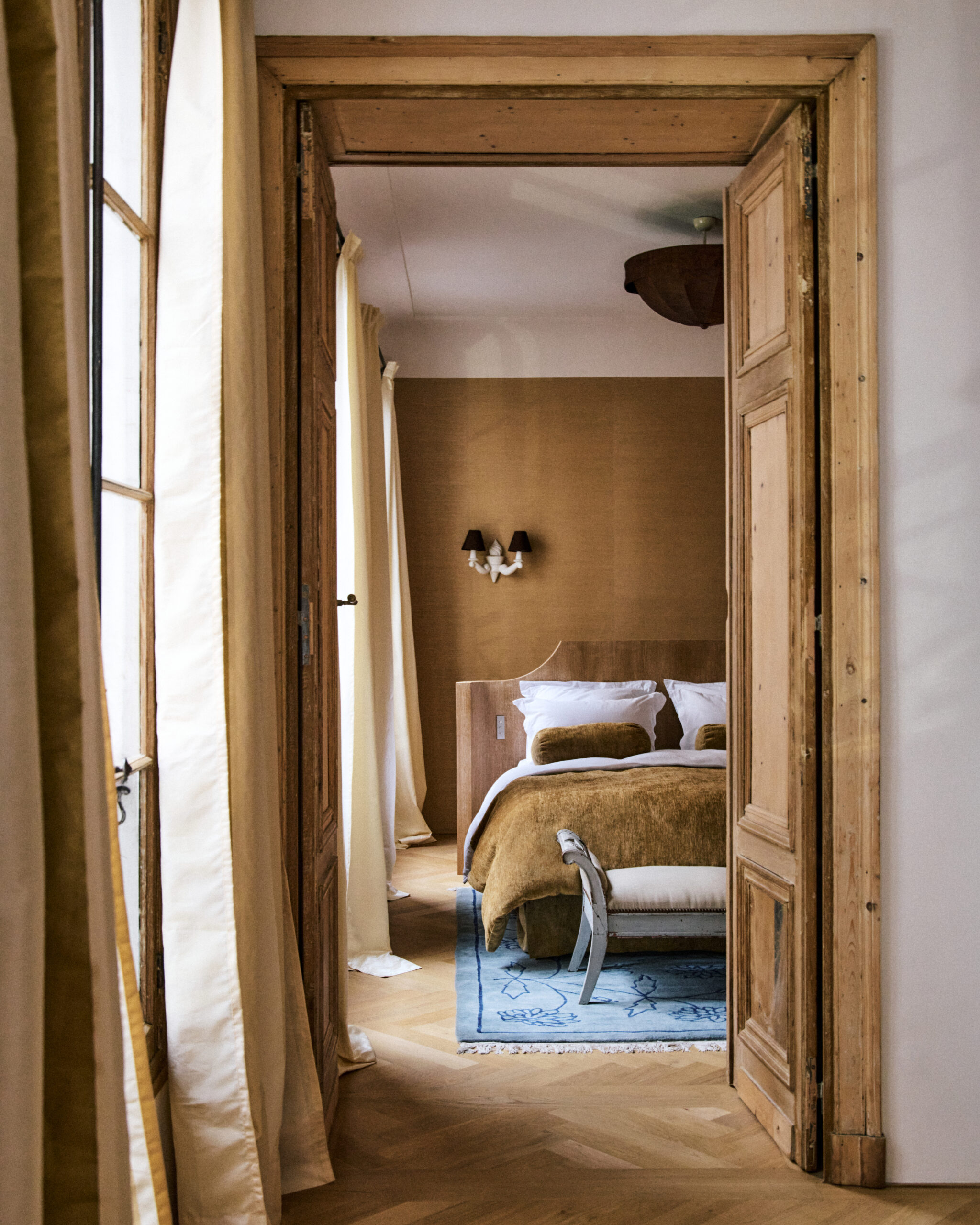
Located in Paris’ 9th arrondissement, the Trévise apartment occupies an early 19th-century Directoire-style hôtel particulier. The apartment underwent an extensive renovation aimed at restoring its original character. Antique doors and windows were sanded to reveal the wood’s warm patina, while materials were selected in continuity with the architectural identity of the space.
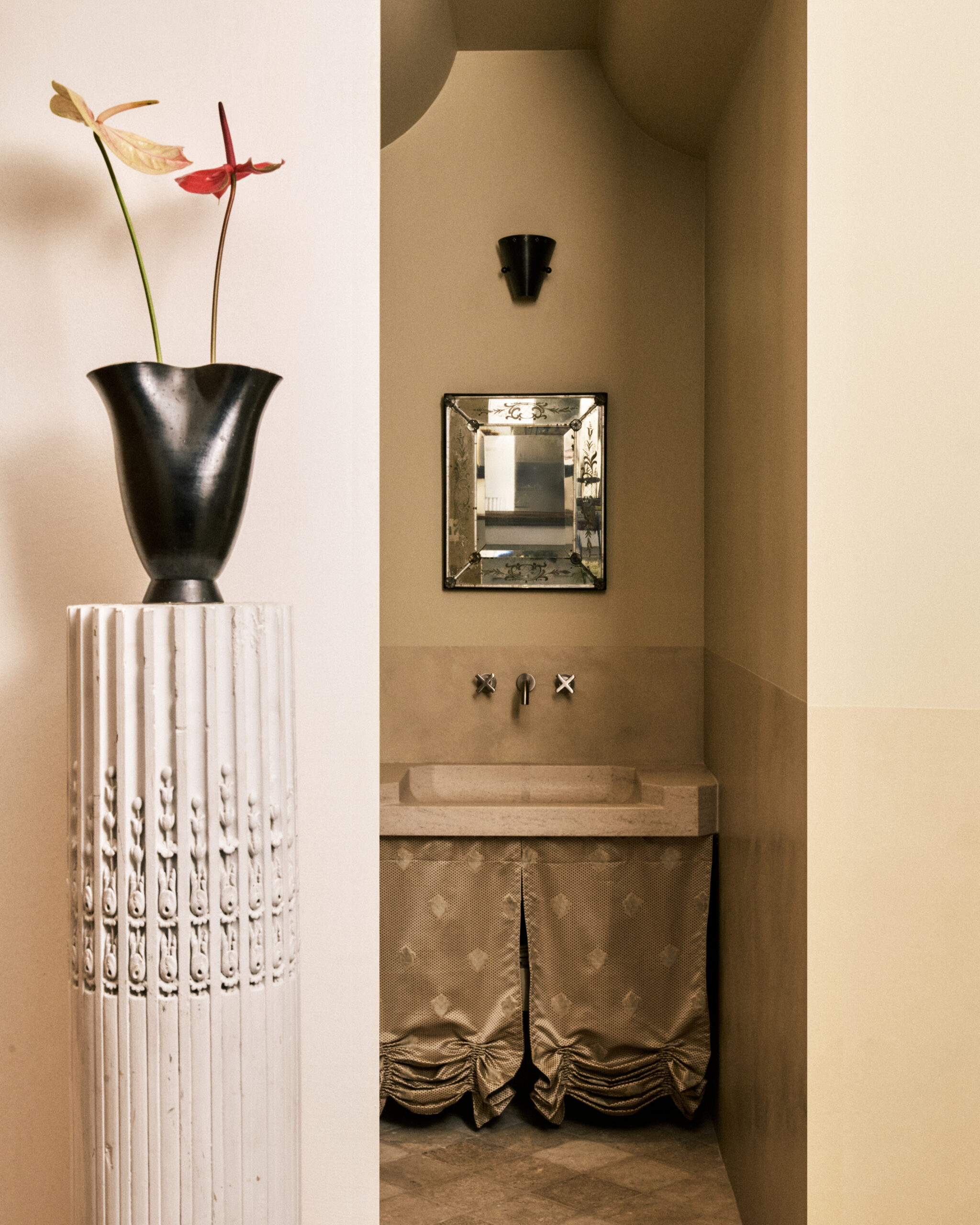
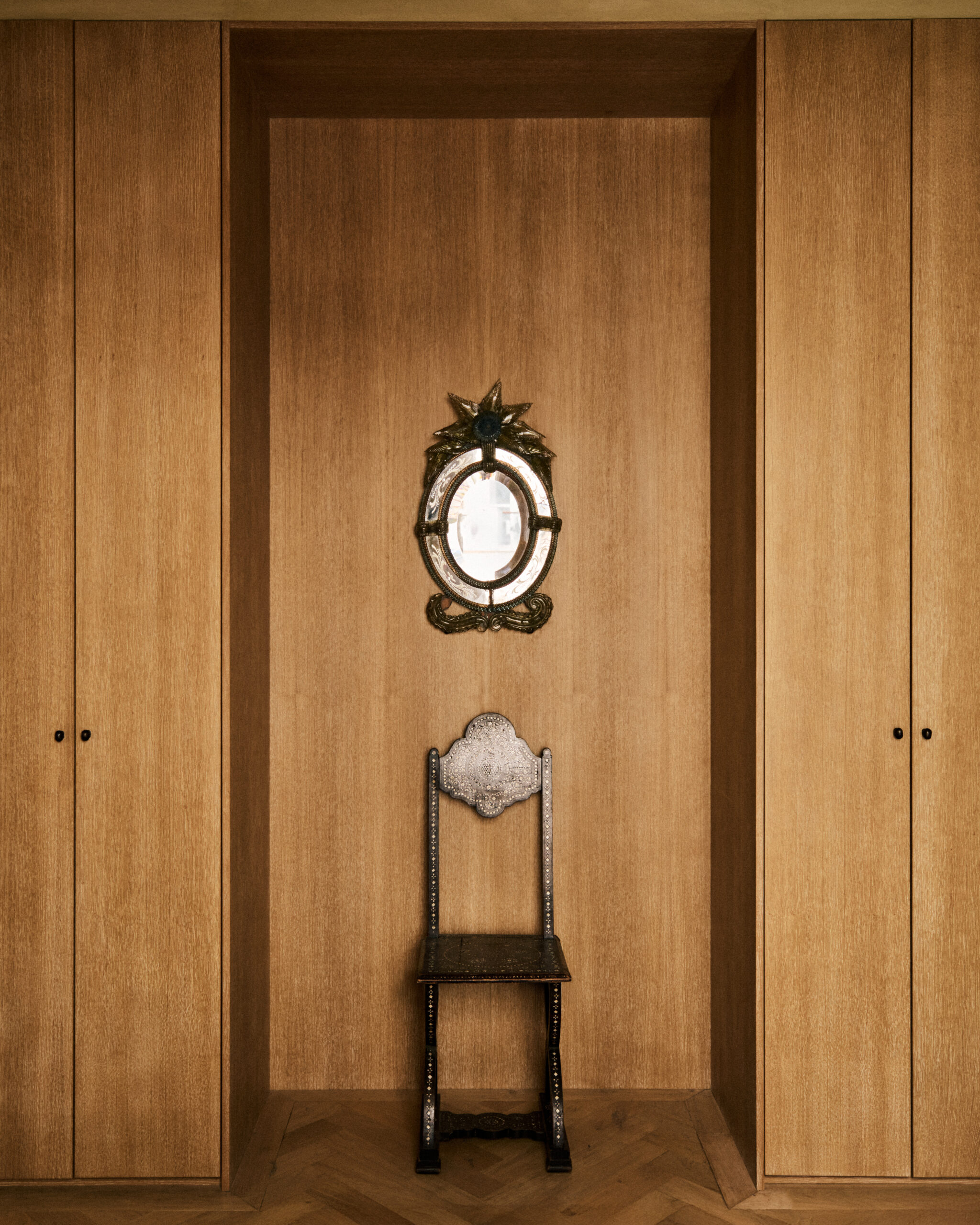
Burgundy stone, a traditional material in France, was used throughout the entrance and kitchen flooring, bringing a restrained, almost rural character to the apartment. In the same spirit, all sinks were custom-designed from solid blocks of Burgundy stone, referencing 18th-century interiors. The bespoke joinery was crafted in cerused oak, echoing the tones of the original woodwork and creating a palette of warm, muted colors.

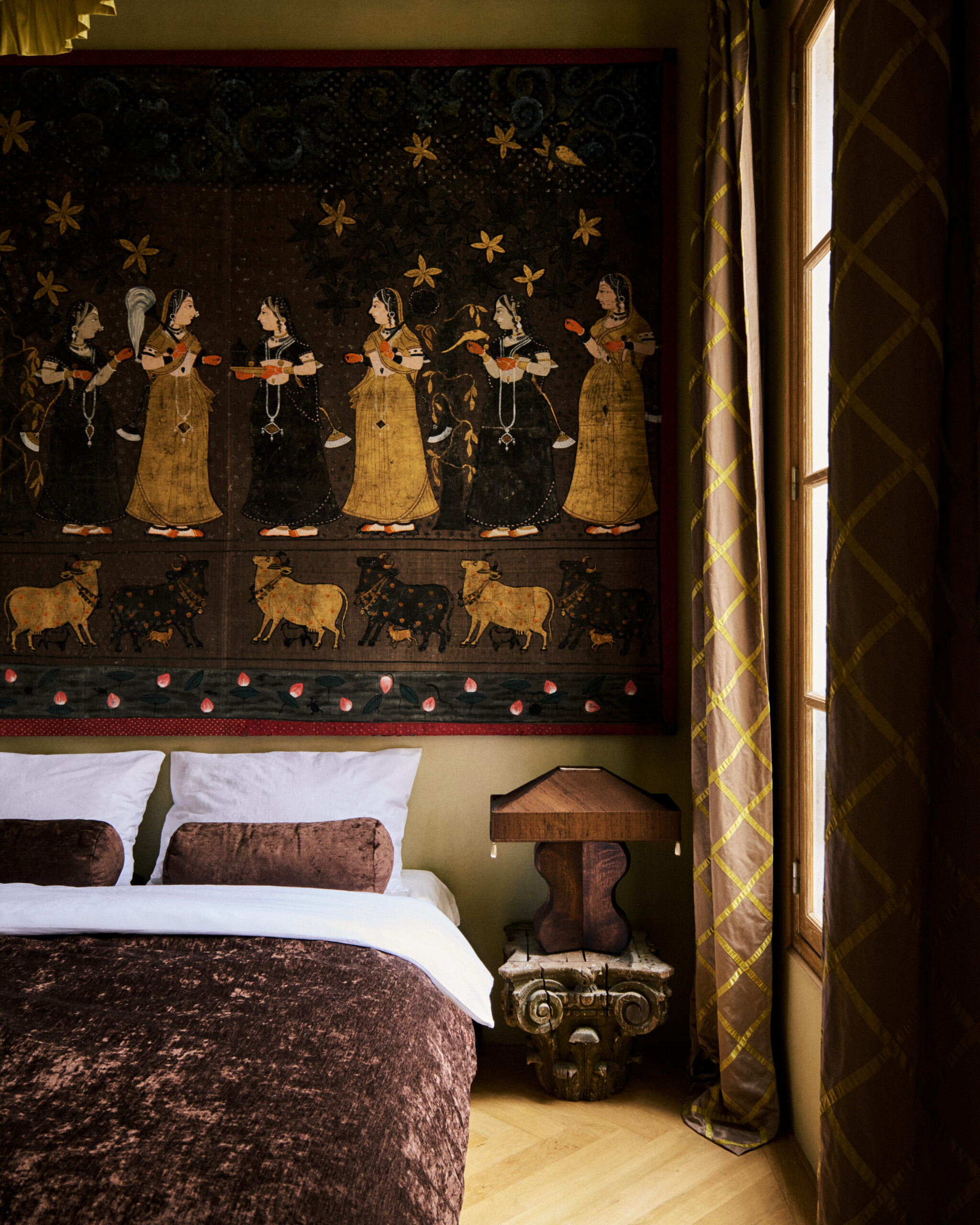
The kitchen and dining area are centered around a sculptural deep green suspension that defines the space. This green extends into the adjacent bedroom, where a large 19th-century Indian tapestry depicting women and animals introduces a more ornamental atmosphere. A yellow Samarcand silk suspension hangs at the center of the room, recalling the tones of the tapestry, while the curtain patterns subtly reference the dining room pendant visible in the foreground.
The living room was conceived in a restrained and quiet spirit, allowing the furniture and artworks to stand out. The Visconti armchair and Palerme sofa accompany a large 17th-century terracotta sculpture representing a draped woman. CHIMERA wall lights and ceiling fixtures punctuate the space with a soft presence. The symmetry of the two antique doors structures the room, one of them opening onto the master suite.
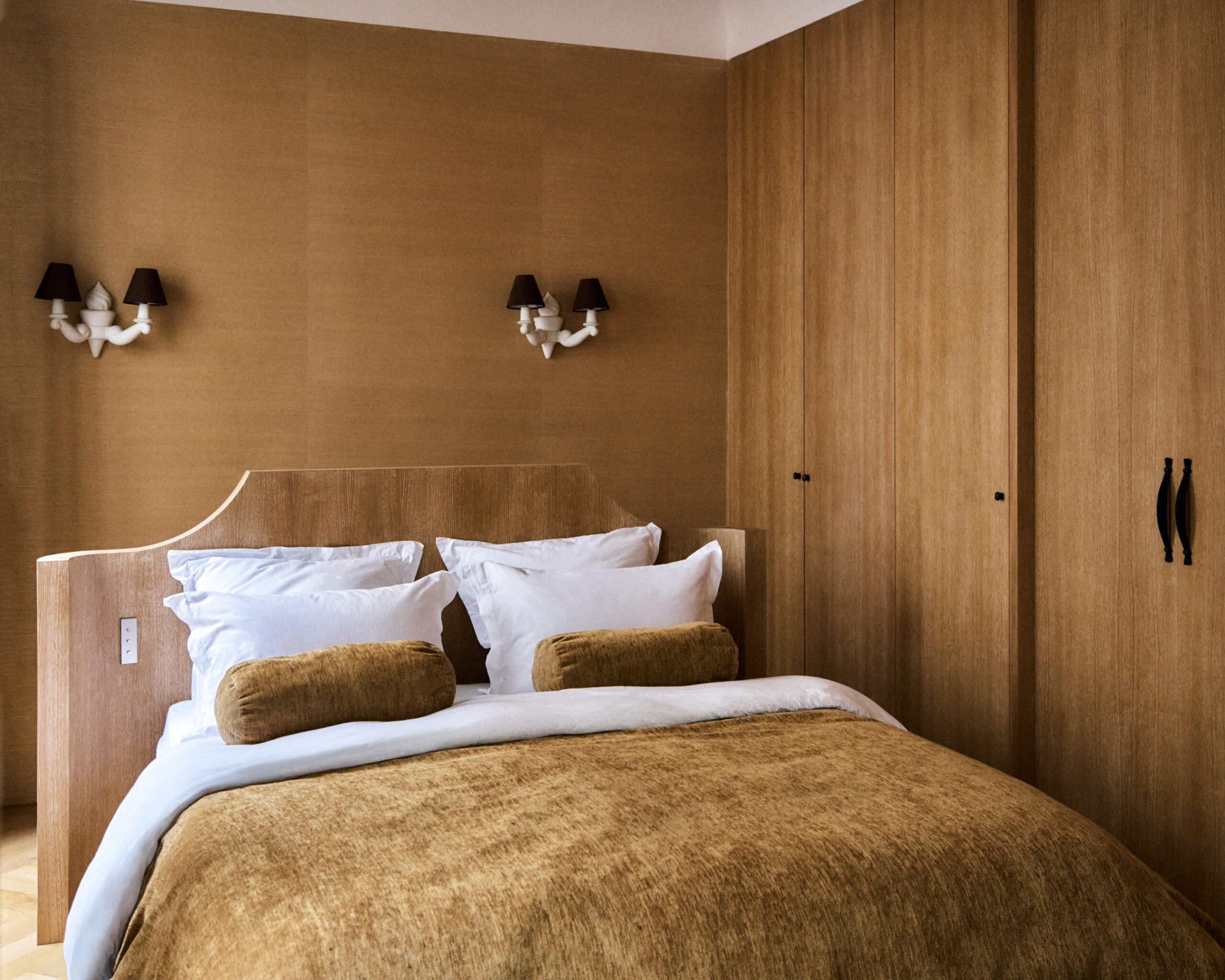
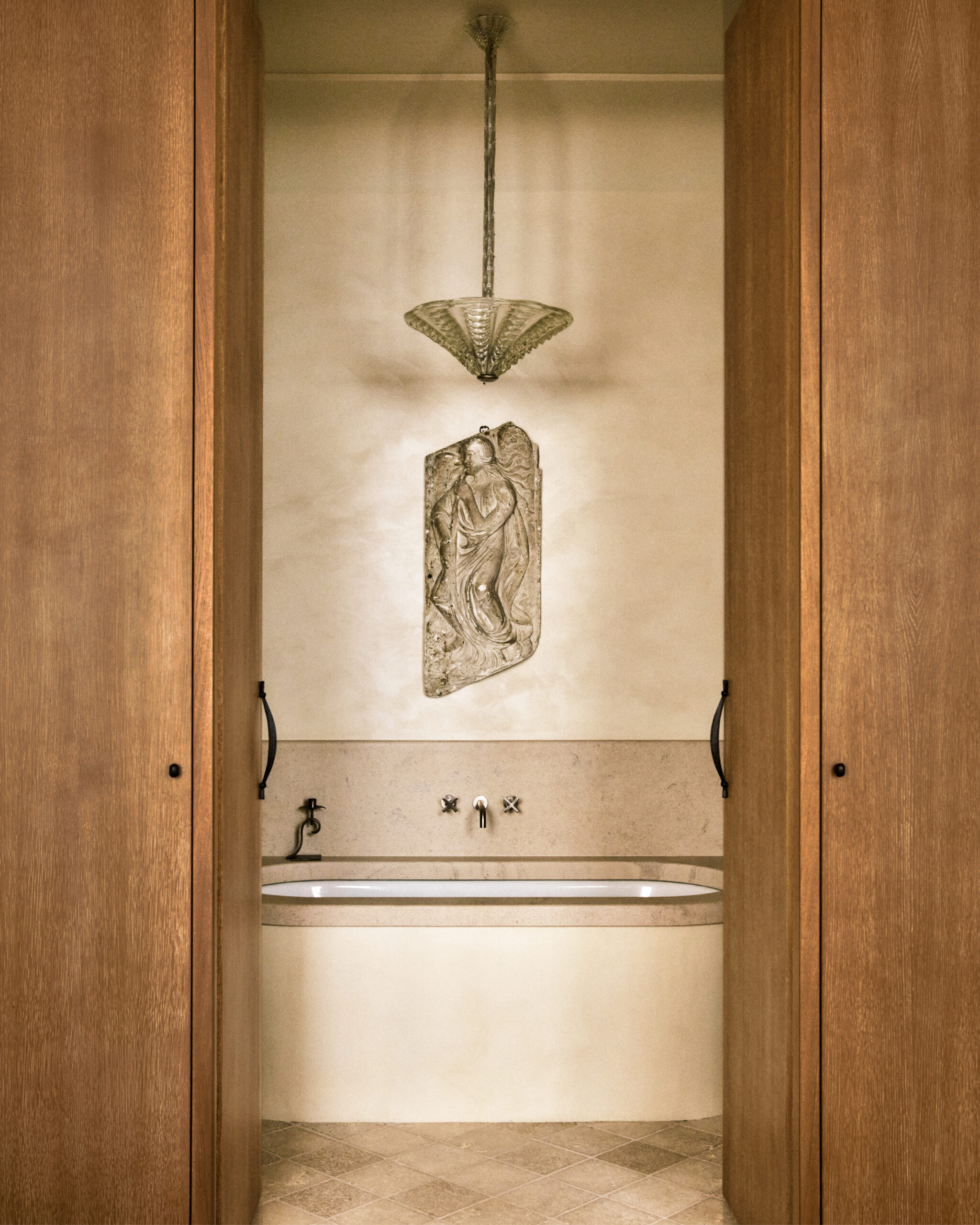
The master suite was designed in warm tones and finished with sisal wall coverings to create a sense of intimacy. Positioned at the center of the room, the bed acts as a structuring element within the space. The headboard, made in cerused oak, echoes the curved forms found throughout the apartment and is accompanied by a small desk. Large double doors integrated into the oak dressing area open onto a spacious bathroom in light tones, where Burgundy stone was used for both the flooring and sinks. Facing the bathtub, an 18th-century plaster bas-relief depicting a musical angel completes the space.